From the cliffs of De Kelders, Hermanus is the line of white buildings on the far shore of Walker Bay, with mountains rising behind it. At night its lights are the only sign of a town for miles. It is about forty minutes away by road, through Stanford, and it makes a perfect day out.
Hermanus is the name most people know. It has built its reputation on whales and the sea, and it has the restaurants, galleries and bustle of a proper seaside town. Visit for a day, then drive home to the quiet.
Morning: the cliff path
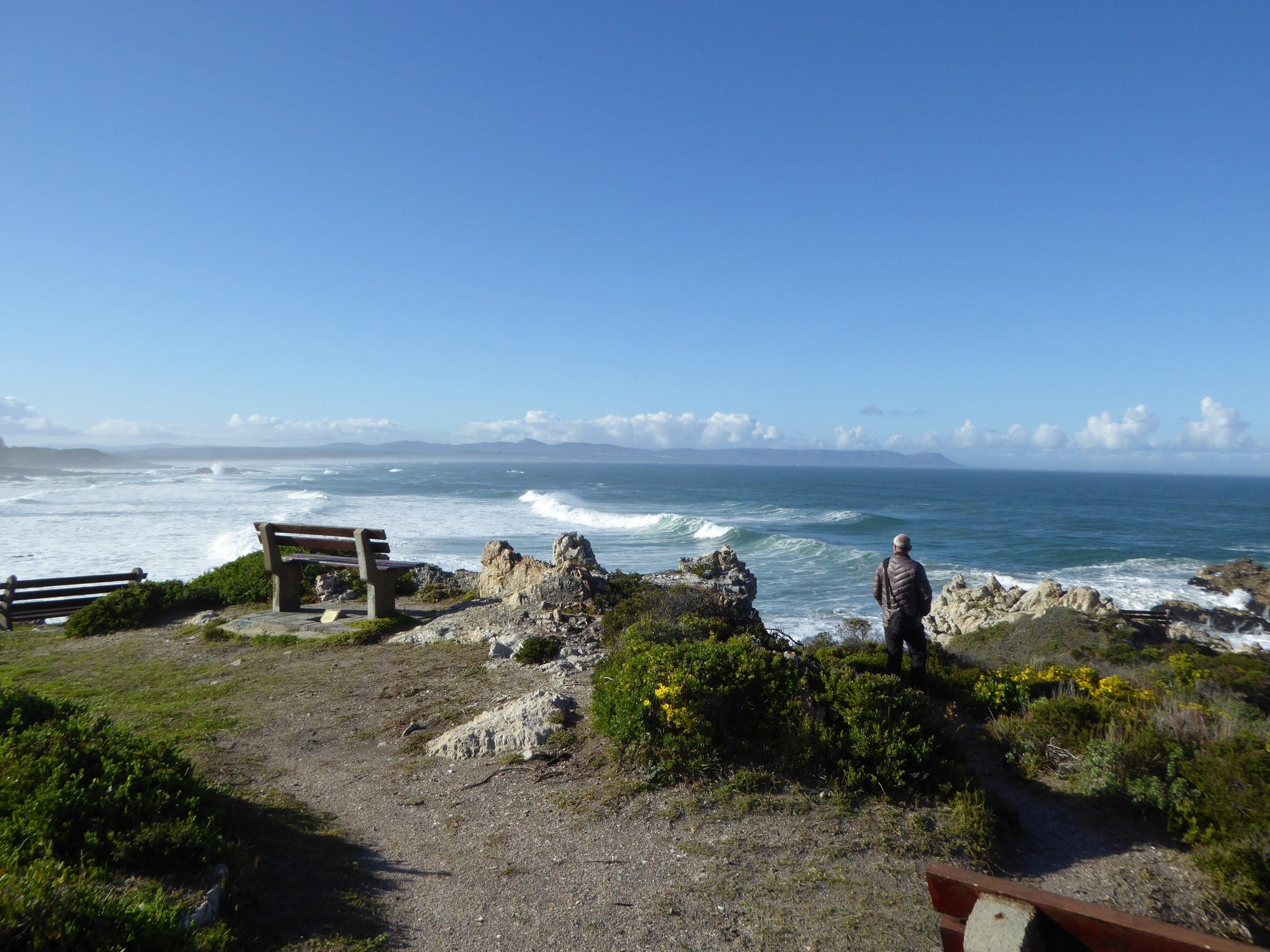
Start with the Cliff Path, which runs along the rocky shoreline of Walker Bay for about 12 kilometres. You don’t need to walk it all. Pick a stretch, perhaps from the town centre heading east, and take your time. The path follows the top of low cliffs and inlets, with benches, fynbos and wide views across the water towards De Kelders.
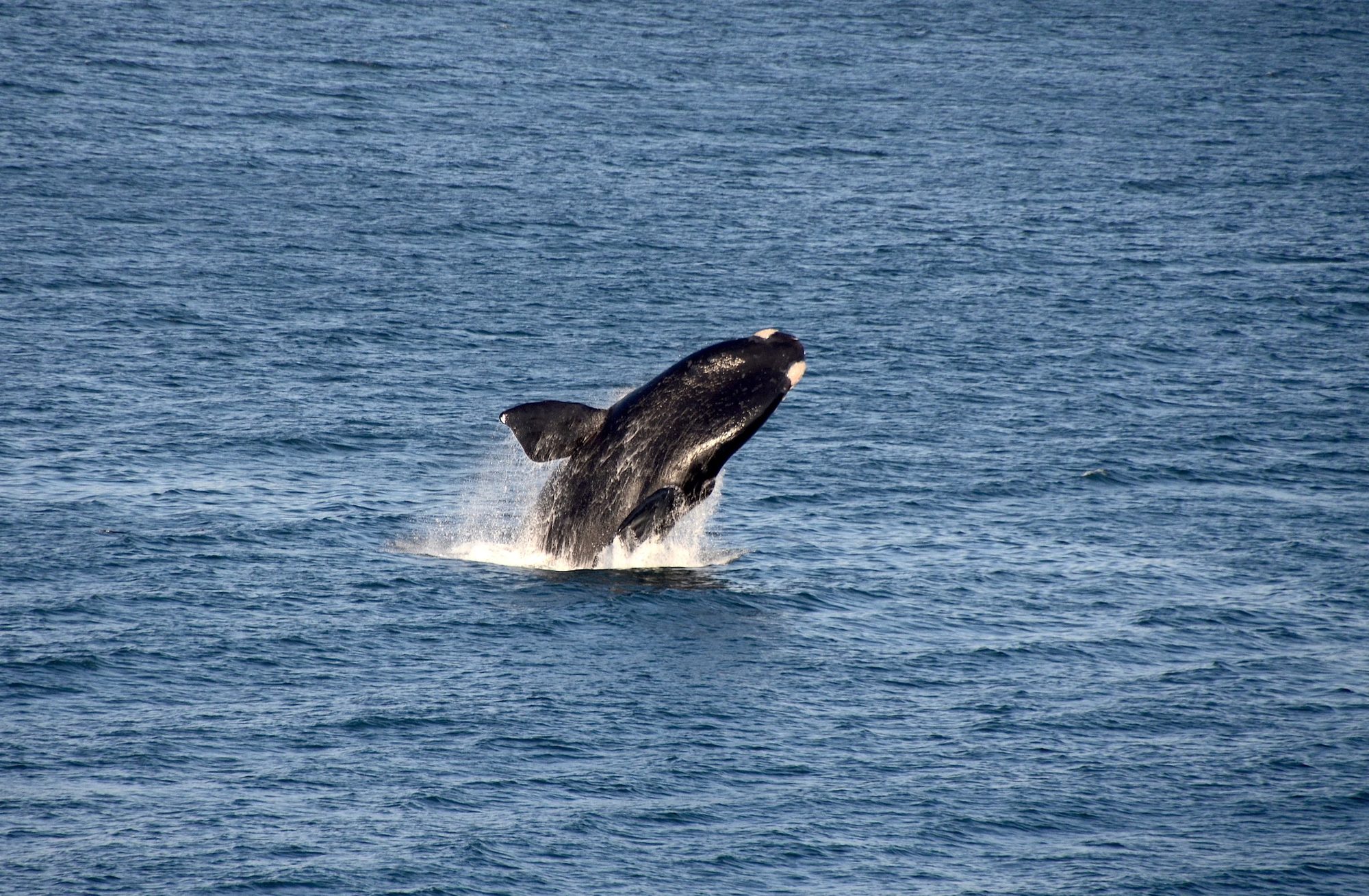
In whale season, from roughly June to November, this is one of the classic places in the world to watch southern right whales from land. Gearing’s Point, beside the Old Harbour, and Sievers Point are well-known viewpoints. Look across the bay too: on a clear day you can pick out the De Kelders cliffs on the other side.
Late morning: the Old Harbour
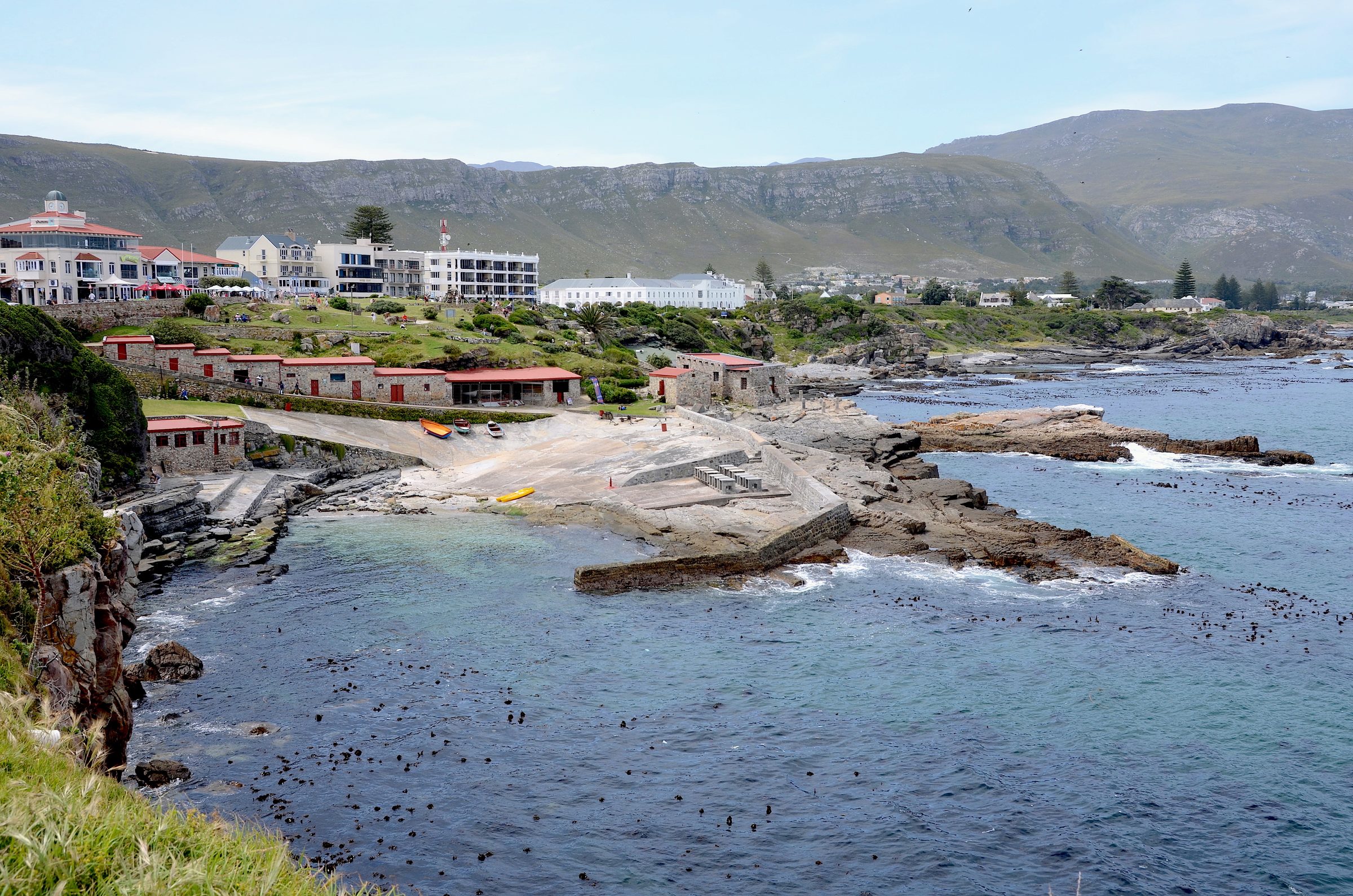
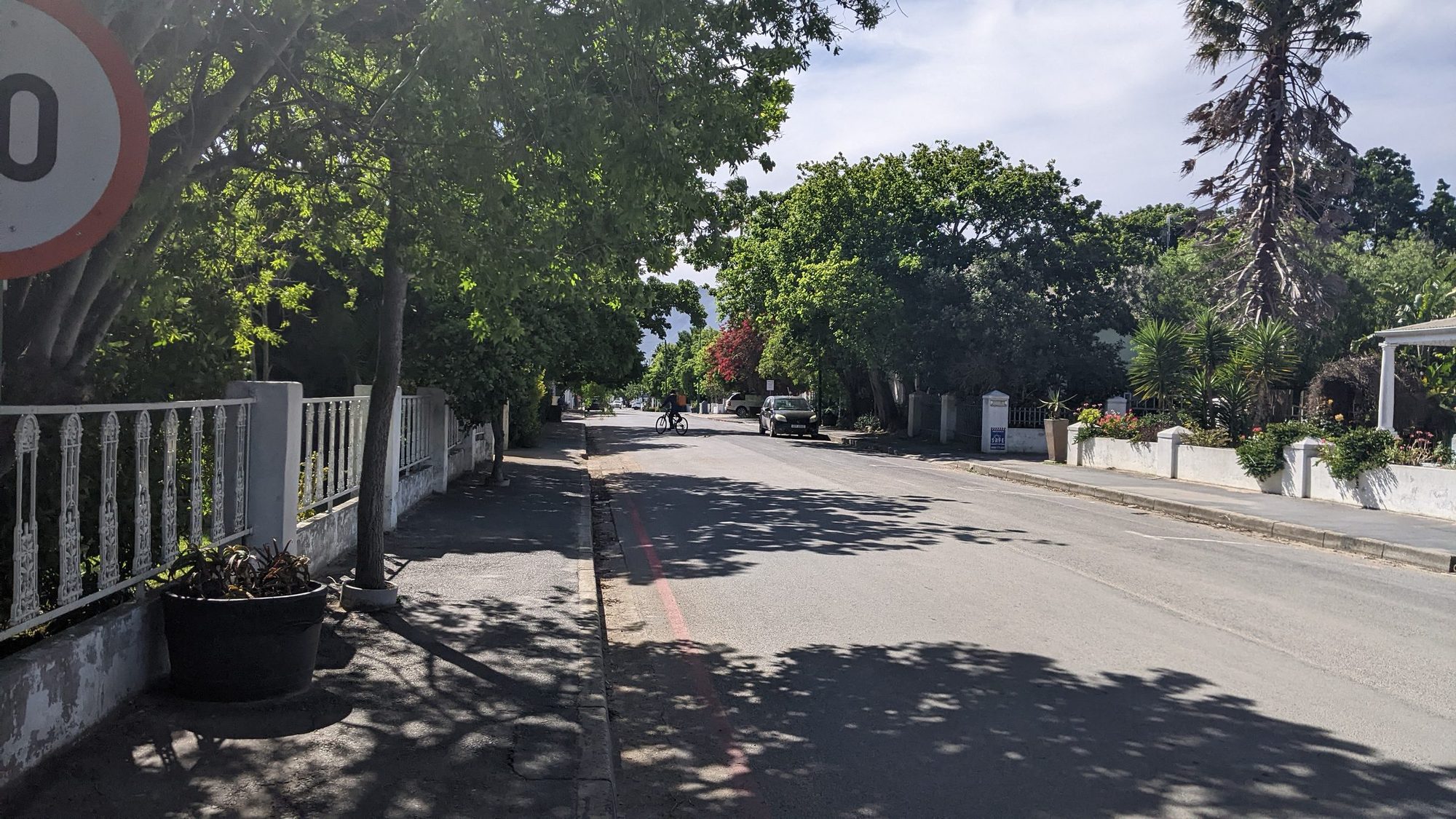
Hermanus began as a fishing village, and the Old Harbour is where that story is best told. It sits in a sheltered cove below the town centre, with old fishing boats hauled up on the slipway, and the cliff path passes right beside it. The streets above are full of cafés, galleries and craft shops. It is a good place for coffee and wandering.
Lunch: the Hemel-en-Aarde Valley
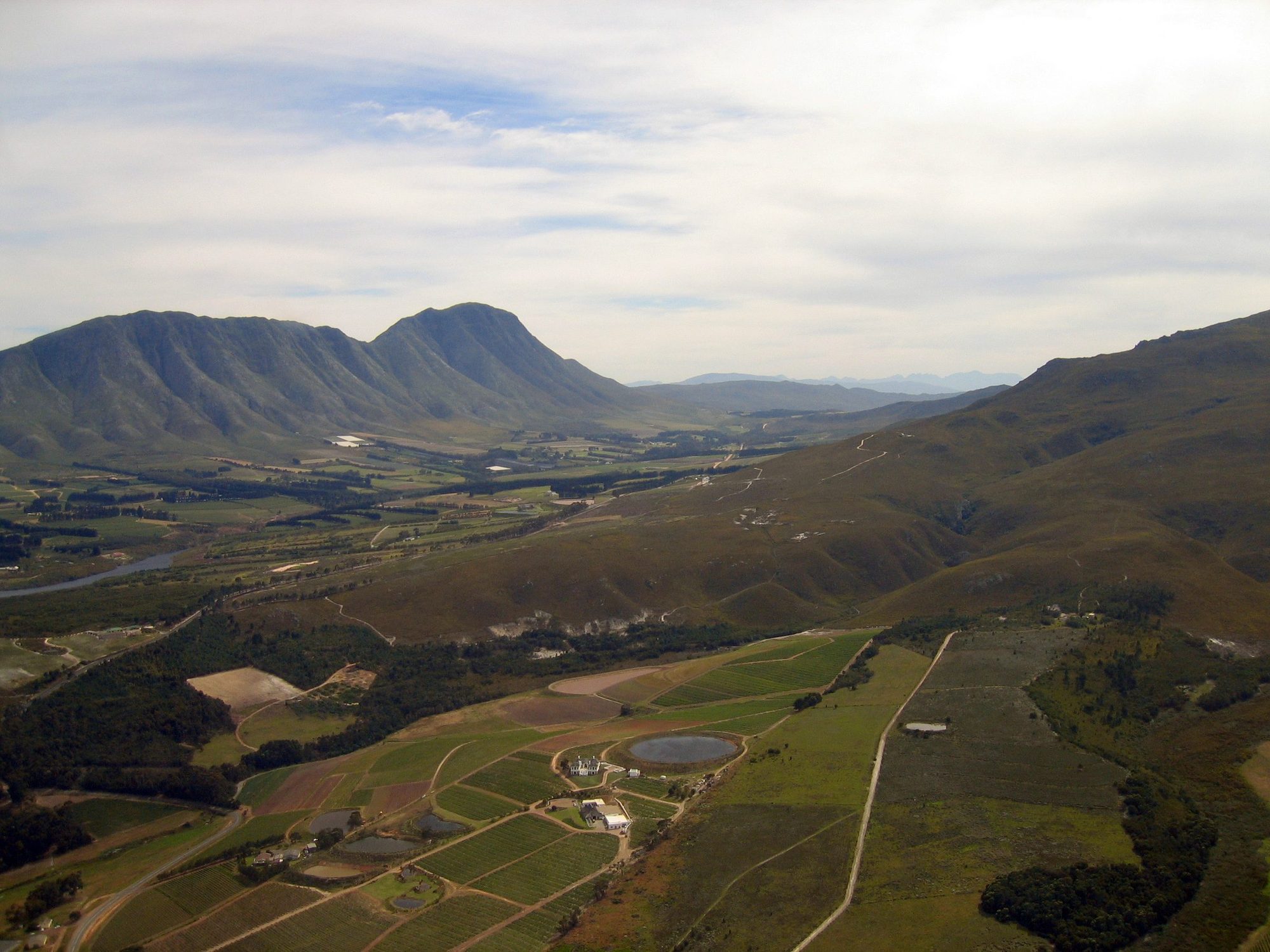
A short drive inland from Hermanus, the Hemel-en-Aarde Valley (“heaven and earth” in Afrikaans) climbs away from the coast between steep, fynbos-covered hills. It is one of South Africa’s most admired cool-climate wine regions, with a particular reputation for Pinot Noir and Chardonnay.
The valley is divided into three Wine of Origin wards. Hemel-en-Aarde Valley is lowest and closest to the sea, Upper Hemel-en-Aarde Valley lies further inland, and Hemel-en-Aarde Ridge is highest. Each has its own soils and style. Many estates offer tastings, and several serve lunch with views down the valley. Book ahead, and choose a driver or keep tastings modest.
Afternoon: beaches and fynbos
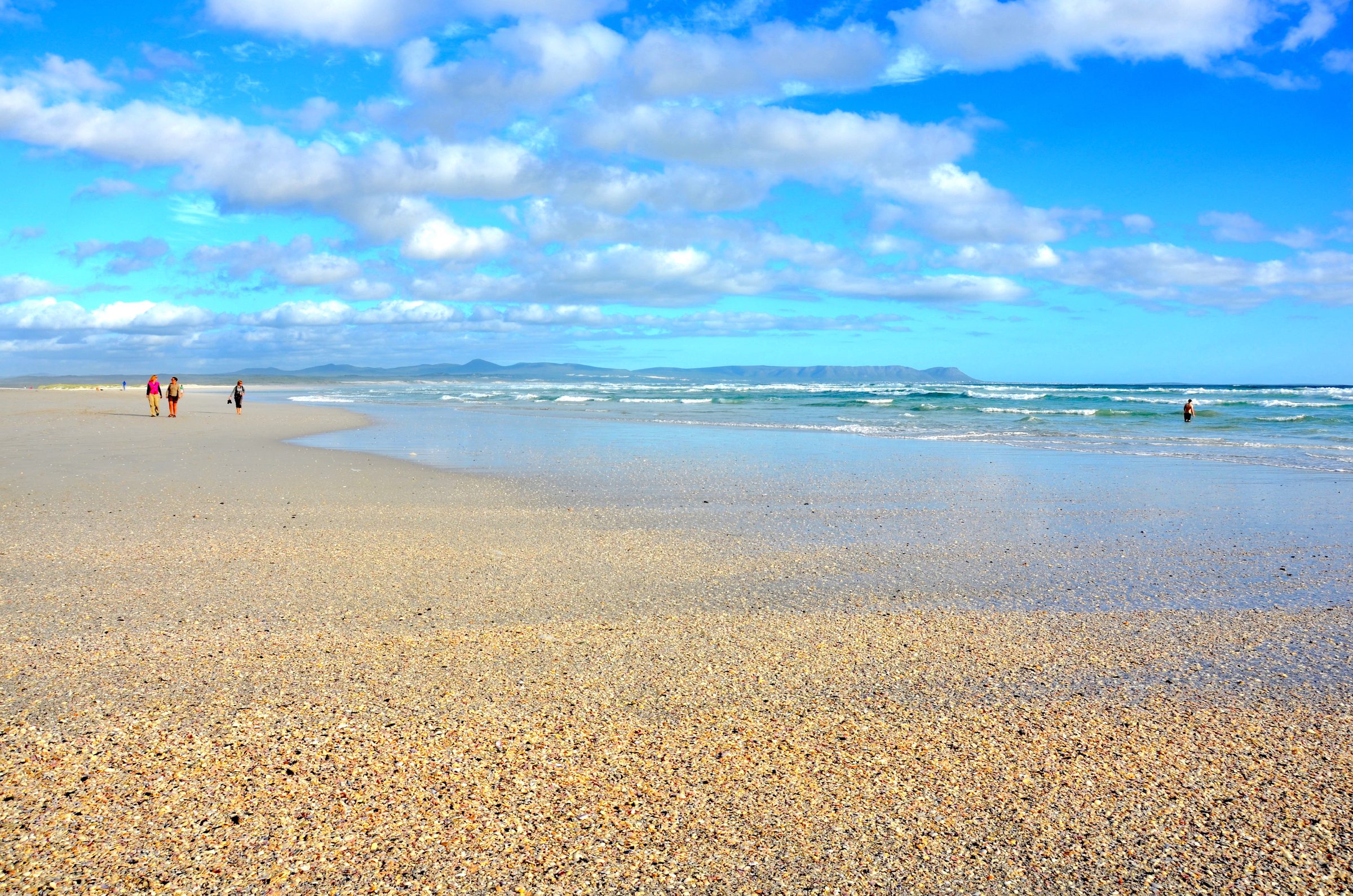
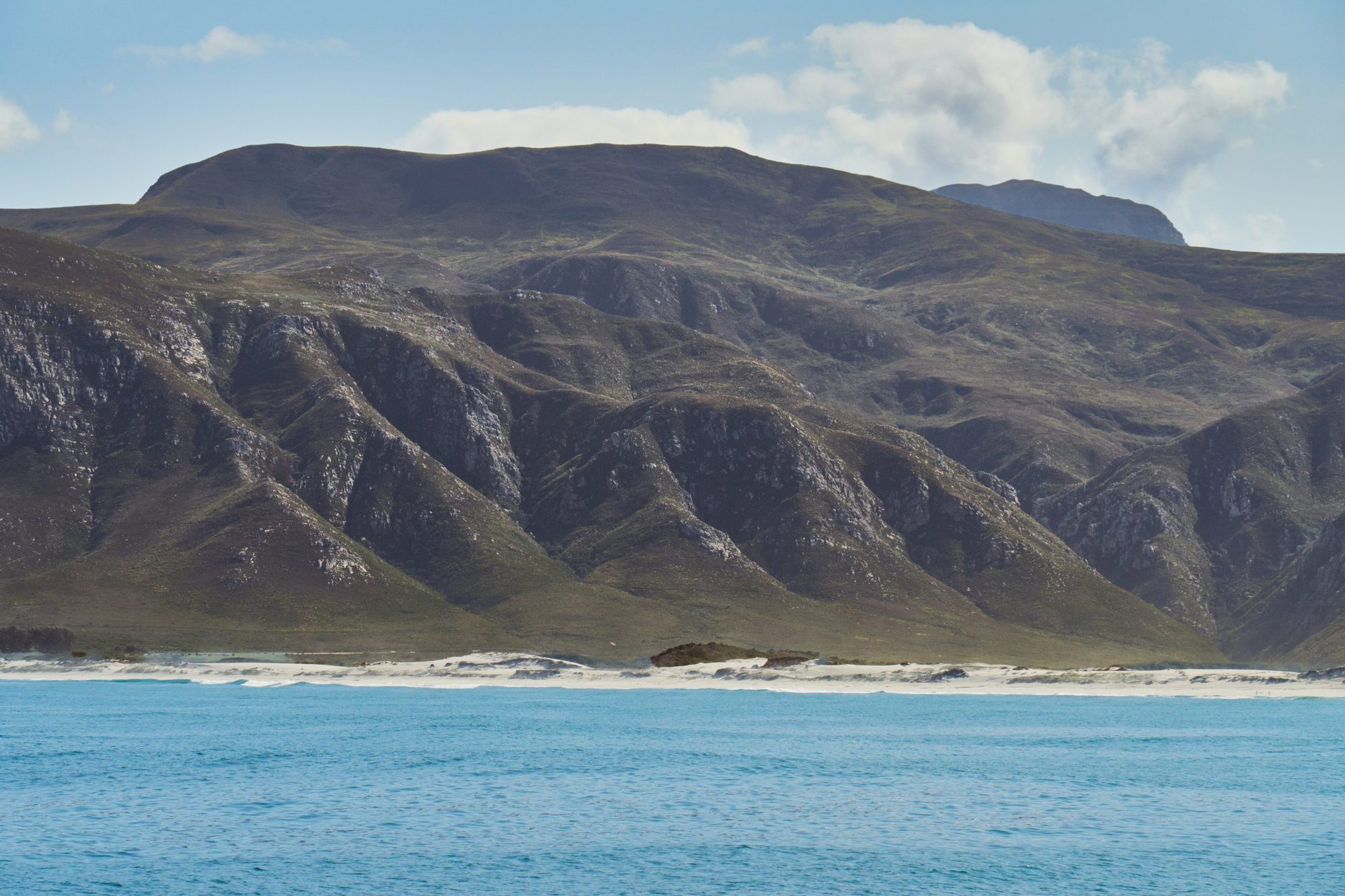
East of town, Voëlklip and Grotto Beach mark the start of the long sweep of sand that curves around Walker Bay. Grotto Beach is a wide, pale beach backed by dunes and mountains, and on calm days it is ideal for a long walk. Further on, the Klein River lagoon opens to the sea at times, the same river that flows past Stanford.
If you prefer hills to beaches, Fernkloof Nature Reserve rises directly above the town, with trails through mountain fynbos and views over the whole bay.
Evening: home across the bay
Hermanus has plenty of restaurants if you want to stay for dinner. We like to drive back to De Kelders as the light fades, though, and watch the sun go down behind the mountains on the Hermanus side of the bay, ideally from our own deck.
Festival season
Hermanus celebrates the return of the whales each spring with its Whale Festival, usually held around late September or early October. It is lively and fun, and the town is busy, which is one more reason to base yourself on the quieter side of the bay.
Stay here
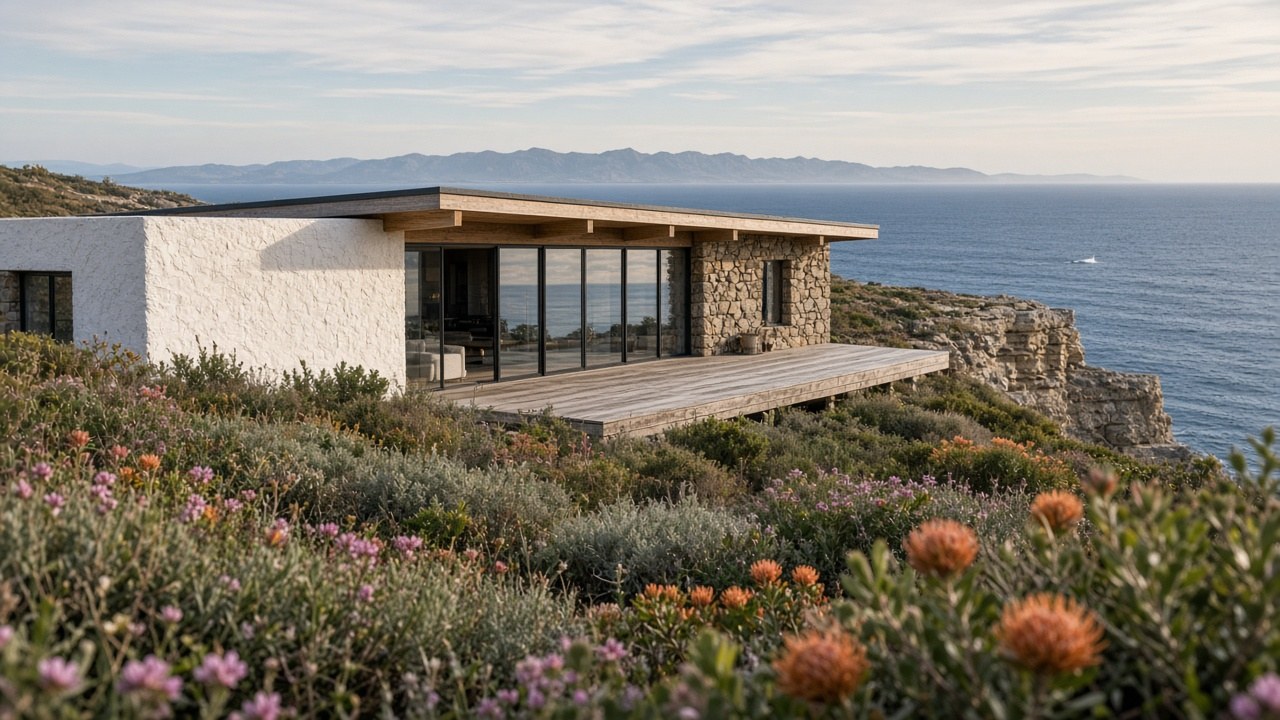
For a quieter base with a view across to Hermanus, see our sample stay, Villa Stilte, in De Kelders. It is illustrative only, not a bookable property. Owners of exceptional homes on Walker Bay are invited to get in touch.