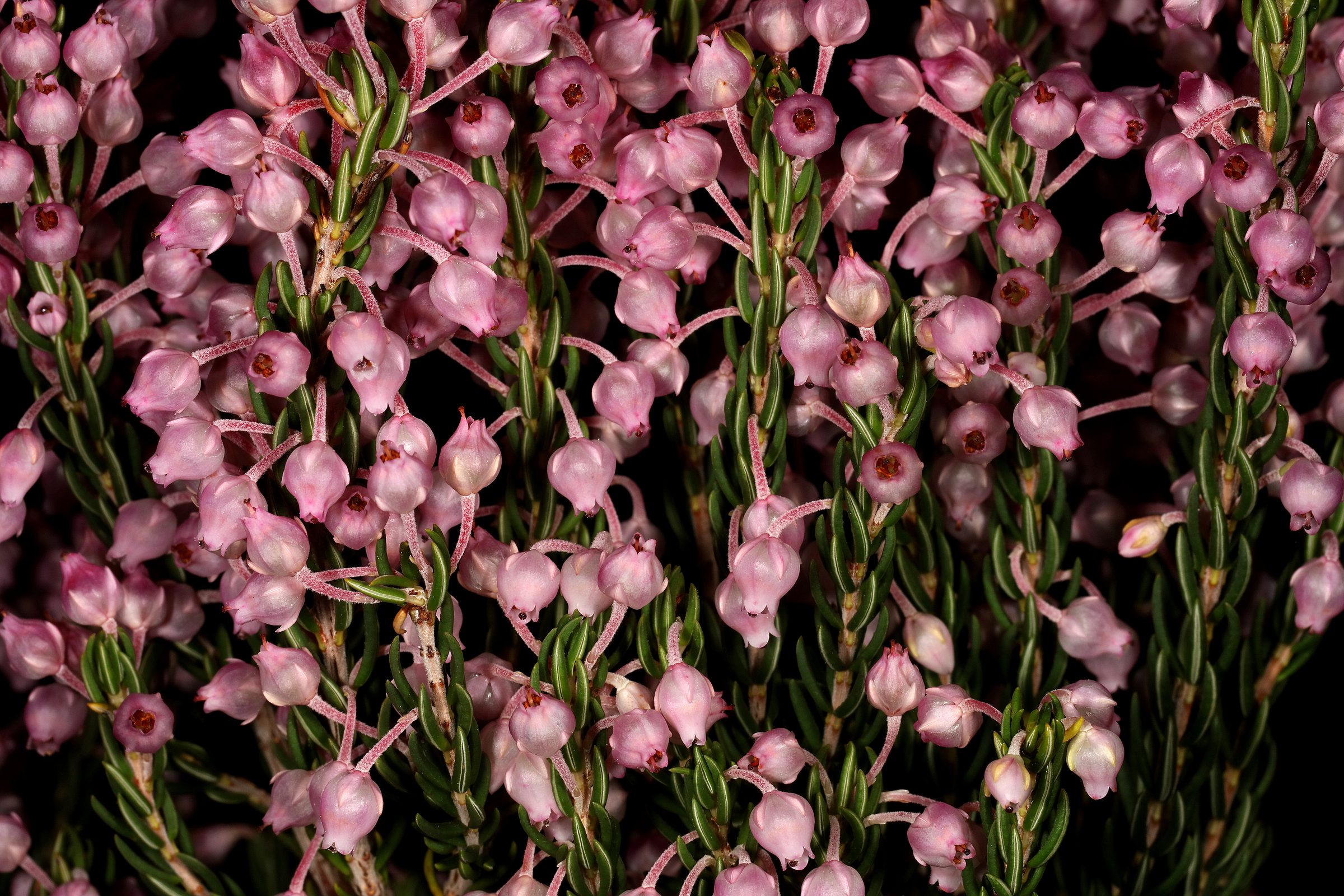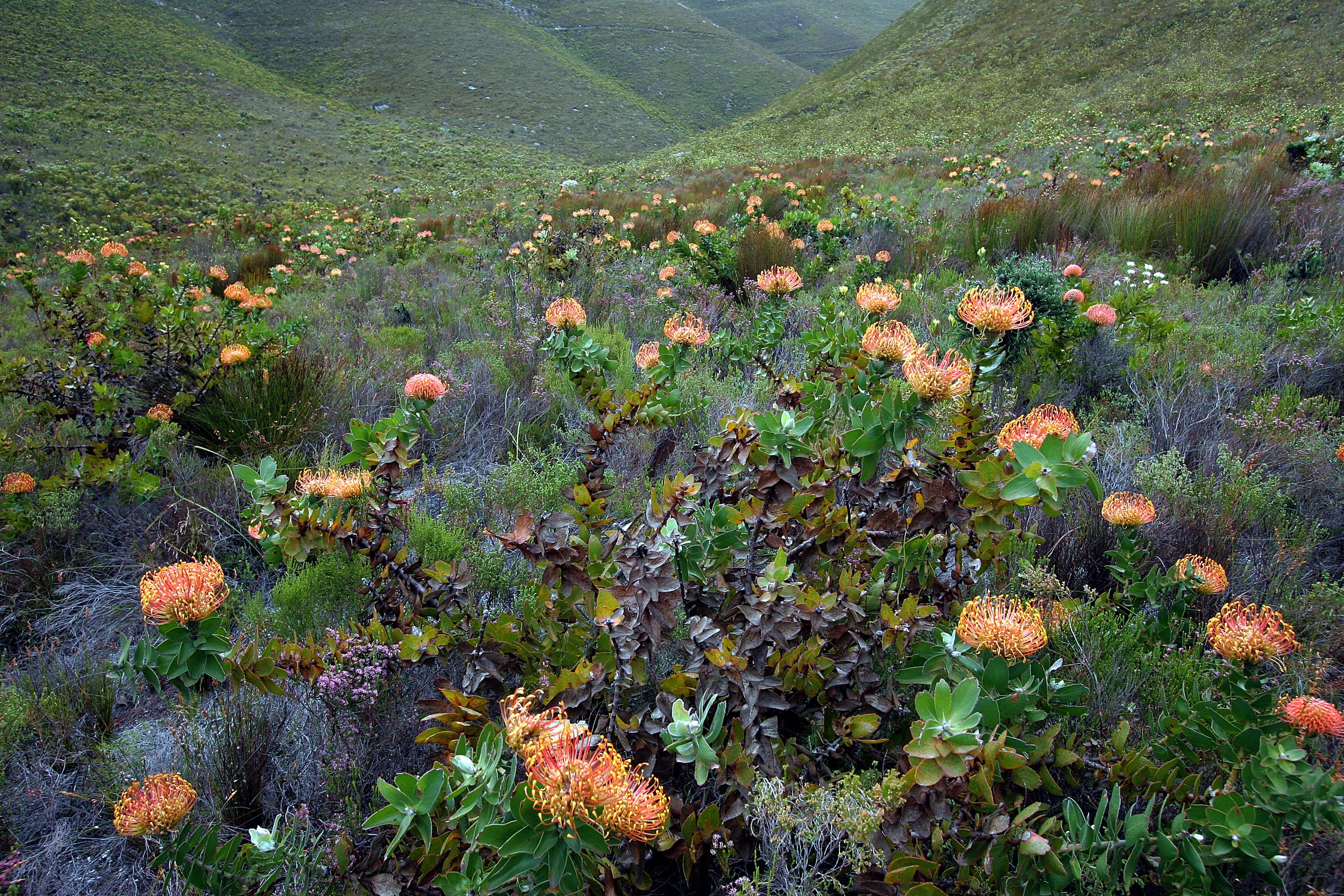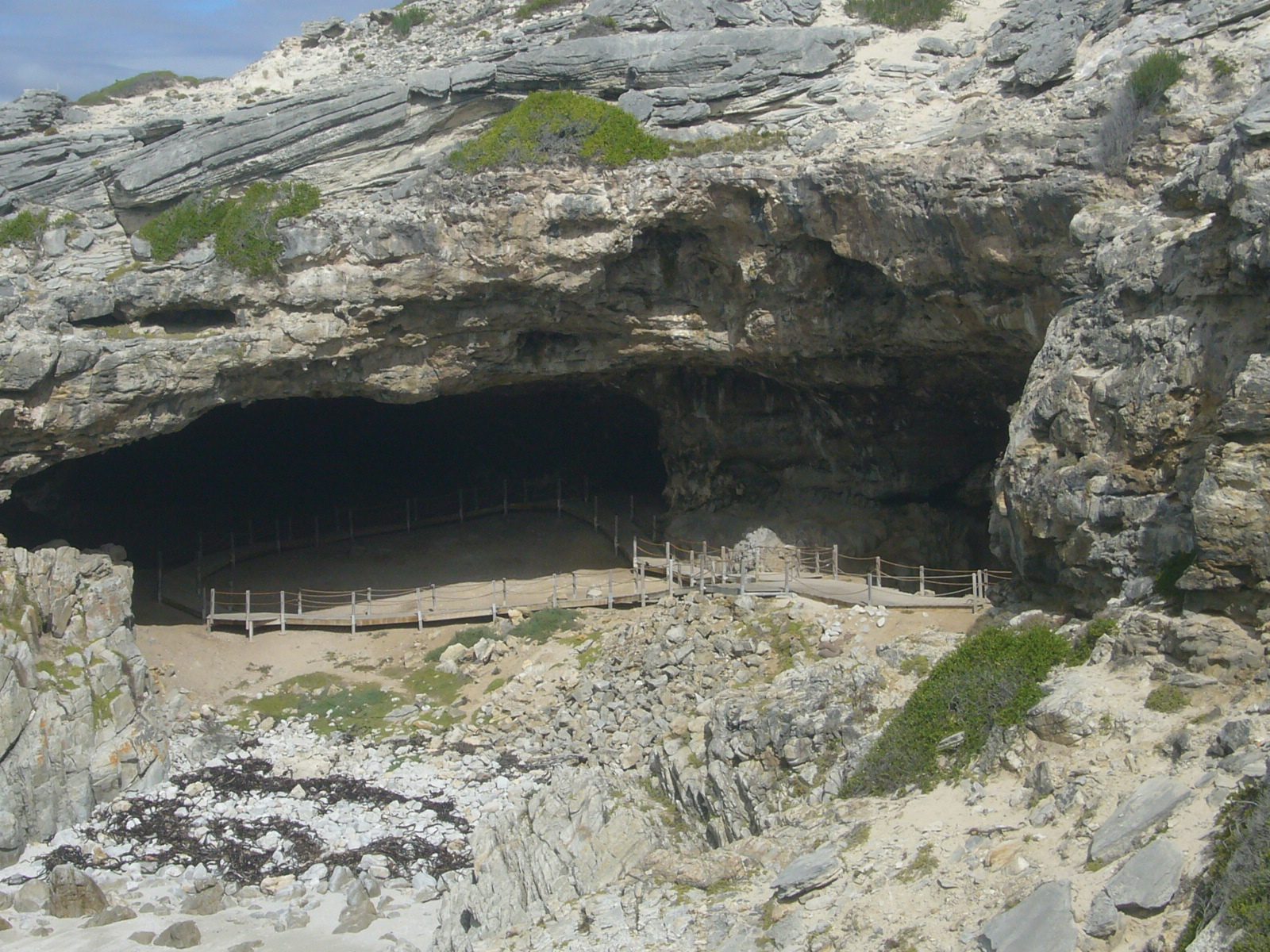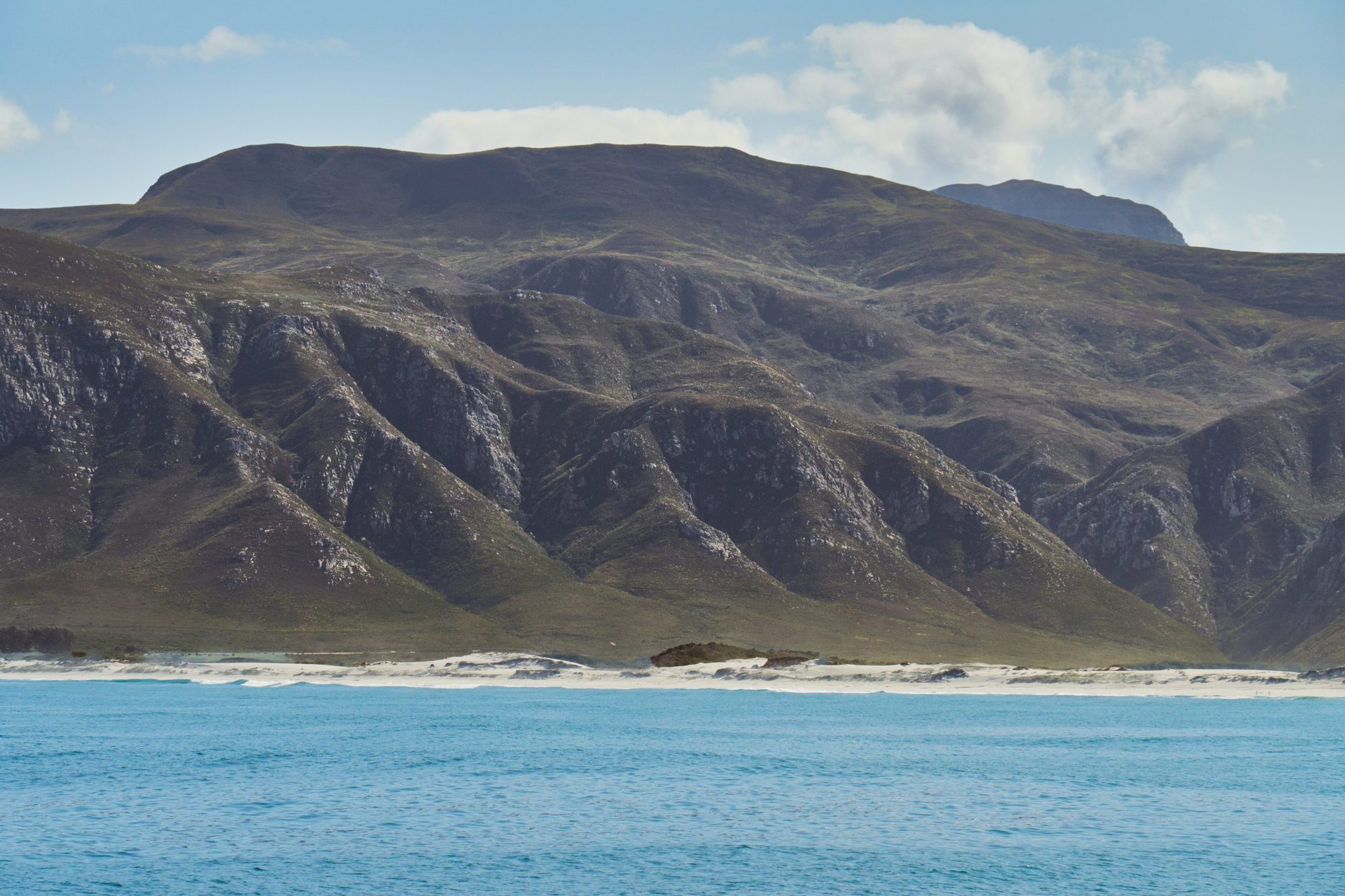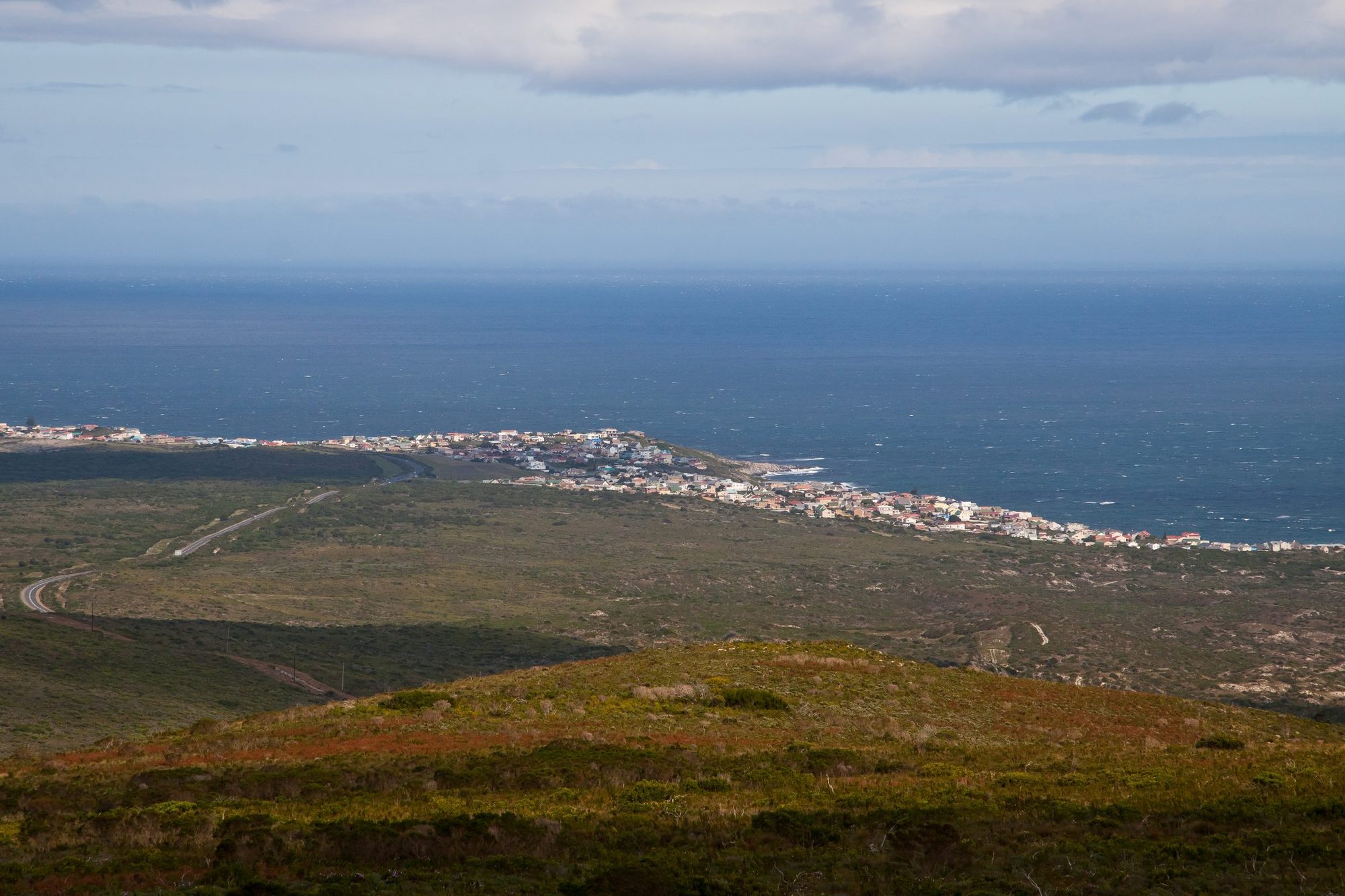
Look inland from the De Kelders cliffs and the hills are a soft, grey-green texture, like tweed. Up close that texture breaks into thousands of plants: fine-leaved heaths, silver shrubs, reeds, bulbs and, in their season, the extravagant flowerheads of proteas and pincushions. This is fynbos, and it is one of the great reasons to come to the Overberg.
A plant kingdom of its own
Fynbos (Afrikaans for “fine bush”) is the dominant vegetation of the Cape Floral Region, a UNESCO World Heritage Site and the smallest of the world’s six floral kingdoms. It is also by far the richest for its size. A remarkable number of its species grow nowhere else on earth, and some are confined to a single hillside.
Fynbos is shaped by fire. Many plants need periodic burns to release their seeds and regenerate. The year after a fire can bring extraordinary flowering, and the rest of the time the landscape rewards slow looking. Spring, roughly from August to October, is the showiest season, but something is flowering almost all year.
Grootbos: a reserve in the hills
Ten minutes from De Kelders, on the hills above Walker Bay, Grootbos Private Nature Reserve protects some 3,500 hectares of fynbos and forest. The reserve records more than 1,000 plant species, including seven new to science discovered on the property. It also protects ancient milkwood forests, a rare and deeply atmospheric habitat of twisted, shade-giving trees in the lee of the dunes.
Grootbos is a luxury lodge, and its guided experiences, including botanical tours, walks, horse riding and marine outings, are mainly for its guests. Even if you are staying elsewhere, it is worth knowing that the view from these hills is one of the finest in the Overberg: De Kelders in the foreground, and the whole of Walker Bay beyond.
Walker Bay Nature Reserve and Die Plaat
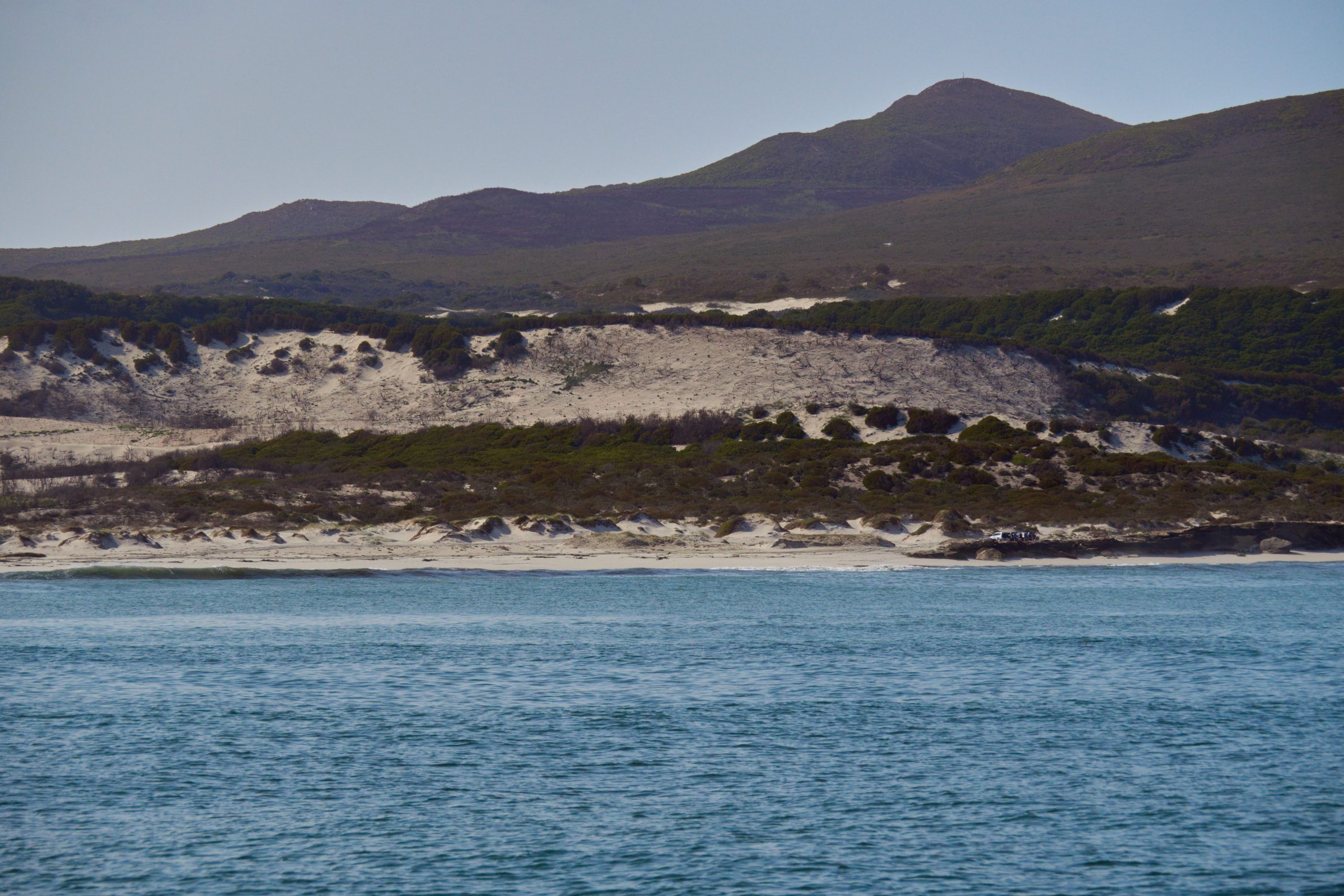
Below De Kelders, the coast belongs to Walker Bay Nature Reserve, managed by CapeNature. Its largest section stretches from the Klein River to De Kelders. At its heart is Die Plaat, a long white sand beach broken by limestone outcrops, backed by dunes and coastal fynbos. On a clear day you can walk for hours with only oystercatchers and the occasional angler for company. Between roughly June and November, CapeNature notes, you may see southern right whales offshore.
Practicalities matter here. Access is through the reserve gates (De Kelders is the closest), and a conservation fee applies. A permitted 4x4 fishing trail runs along part of the coast, but walking or driving on the dunes themselves is not allowed. The beach is wild and exposed: swimming is not recommended in the open surf, and the weather can turn quickly. Take water, sun protection and a windproof layer, and check gate times with CapeNature before you set out.
Reading the fynbos
You don’t need to be a botanist to enjoy it, but a few names help:
- Proteas. Large, cup-shaped flowerheads. The king protea is South Africa’s national flower.
- Pincushions (Leucospermum). Blazing orange and yellow domes that look exactly like their name.
- Ericas (heaths). Hundreds of species of tiny bell- or tube-shaped flowers, from white to deep pink.
- Restios. Reed-like plants that give fynbos its wind-combed, silvery texture.
Watch too for sunbirds and Cape sugarbirds feeding on the flowers, and for the small, busy life of the bush: lizards, tortoises and butterflies.
Closer to Hermanus
Across the bay, Fernkloof Nature Reserve climbs the mountains above Hermanus, with trails through mountain fynbos and wide views over the town and the sea. It pairs well with a Hermanus day.
Stay here
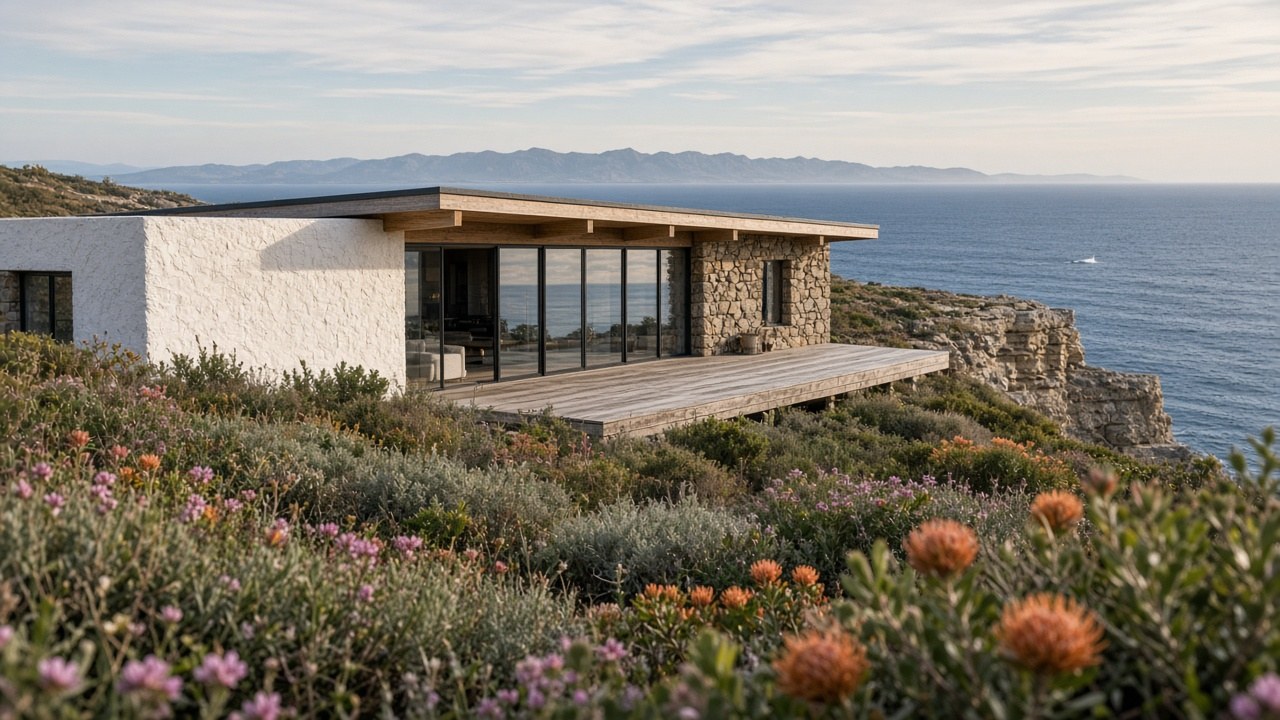
A fynbos garden is part of the pleasure of a De Kelders home. Our sample stay, Villa Stilte, imagines one: indigenous planting running to the cliff edge. It is illustrative only, not a bookable property. If your home sits in this landscape, we would like to see it.